It happened quietly. No big announcement. No countdown.
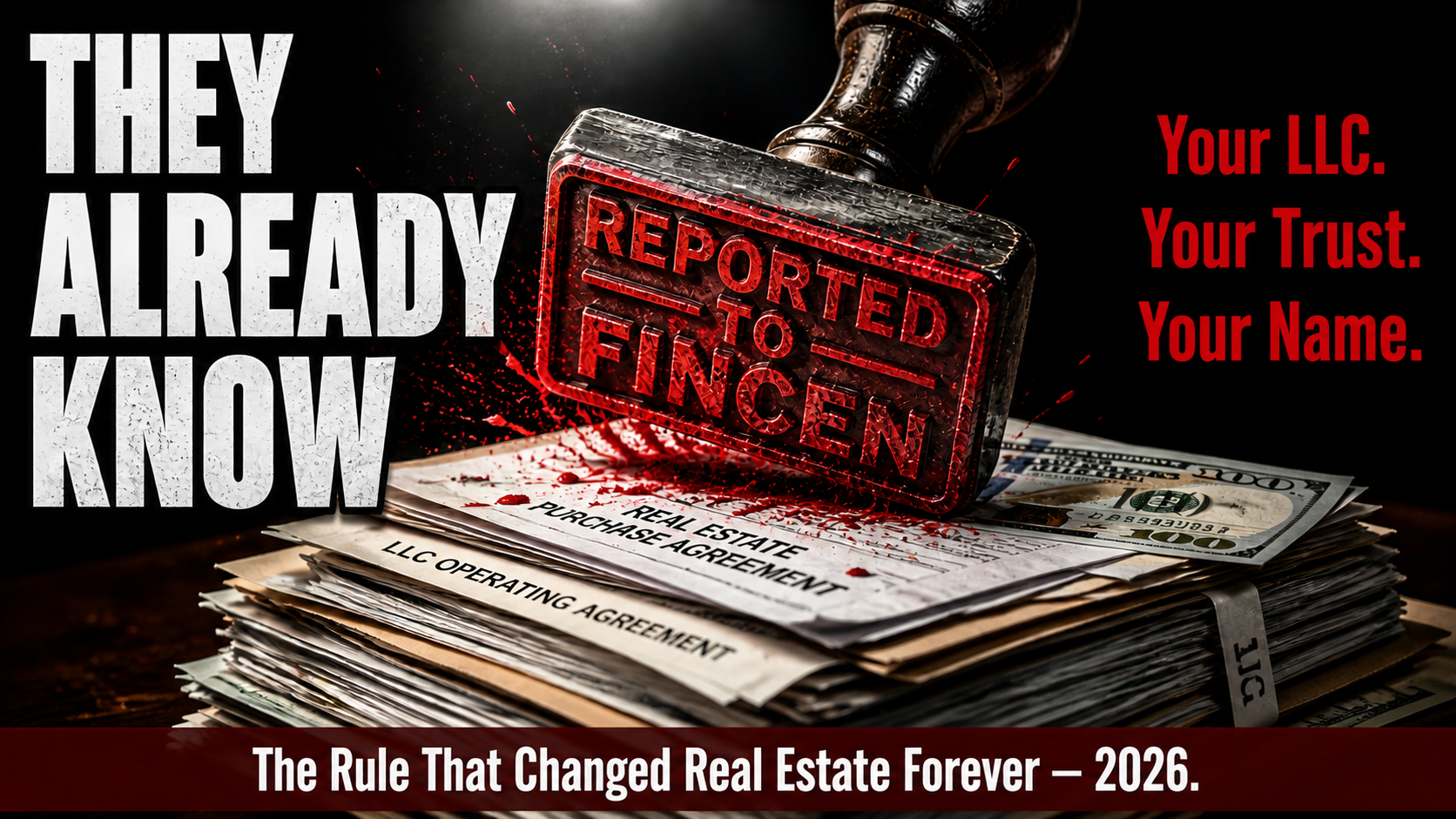
On March 1st, 2026, the federal government officially pulled back the curtain on one of the last remaining privacy shields in American real estate. The Financial Crimes Enforcement Network — FinCEN — rolled out a sweeping new reporting rule that affects virtually every cash buyer, hard money borrower, and creative finance investor in the country.
If you haven’t heard about it yet, you’re not alone. Thousands of investors have already been caught off guard. And the penalties for non-compliance aren’t a slap on the wrist — they’re life-altering.
Here’s everything you need to know, including the one legal strategy sophisticated investors are already using to protect their privacy.
🎥 Watch This Before You Read Another Word
What Exactly Changed on March 1st, 2026?
For decades, real estate was a true privacy haven. Investors could purchase properties through LLCs, corporations, or trusts — keeping their personal names completely off public records. That era is now over.
Under the new FinCEN rule, every residential property purchased with non-financed funds and held inside an entity or trust must be reported to the federal government — by your title company, escrow agent, or closing attorney. Automatically. Without your direct consent.
The data goes into a federal FinCEN database. It won’t show up on Zillow or your county’s public records — but federal agencies can access it on demand.
And here’s the part that shocks most investors: if you’ve closed a deal since March 1st, you may already be in the database, even if nobody told you.
Which Properties Are Covered?
The rule applies to:
- Single-family homes
- Duplexes, triplexes, and fourplexes
- Condominiums and co-ops
- Vacant land intended for one-to-four family residential development
Not covered: Commercial properties and buildings with five or more units are currently exempt.
But if you’re buying residential investment property — whether for rentals, short-term rentals, flips, or personal use — you are inside the reporting zone.
This rule applies across all 50 states and US territories. There are no geographic safe harbors.
What Counts as “Non-Financed”?
This is where most investors make their first mistake. “Non-financed” doesn’t just mean paying cash. It means any transaction where the buyer did not obtain a loan from a regulated bank or traditional lender.
That includes:
- Cash purchases — wire transfers, cashier’s checks, cryptocurrency, even gold
- Hard money loans from private lenders who aren’t regulated banks
- Seller financing — where the seller carries the note
- Subject-to deals — where the deed transfers to your entity but the original mortgage stays in place
- Family loans and peer-to-peer lending
- Wrap mortgages and other creative structures
The exemption: If you close with a conventional mortgage from a federally regulated bank, you are exempt. Banks already conduct their own anti-money laundering compliance, so FinCEN doesn’t require a separate report.
“James bought a rental with a hard money loan from a friend. He thought he was flying under the radar. His closing attorney had to file a report with FinCEN, including James’s name, address, and taxpayer ID. He was shocked when his title agent called asking for his Social Security number and a copy of his passport — something he’d never been asked for before.”
What Information Gets Reported?
If the deal triggers all three criteria — residential property, non-financed, held in an entity or trust — here’s what your closing professional must collect and report:
- Full legal name, date of birth, and address of all beneficial owners (anyone with 25% or more ownership or substantial control)
- Citizenship status and taxpayer ID (SSN or EIN)
- For trusts: trustees and beneficiaries must be disclosed
- Purchase price, payment method, and source of funds
The report must be filed within 30 days of closing, and records must be kept for five years.
“Maria bought a property in her Wyoming LLC for privacy. Her title company was required to report her as the beneficial owner — even though her name isn’t on the deed. She was furious, but there was no legal way around it.”
What Happens If You Refuse to Comply?
Simple: your deal doesn’t close.
Title companies face their own severe penalties for non-compliance, which means they are heavily incentivized to over-report rather than risk missing a filing. If you refuse to provide the required information, your title agent will refuse to issue title insurance, and your closing will be cancelled.
“Ethan tried to handle his own closing to avoid reporting. The title company refused to issue title insurance unless he provided all required information. He had to choose between his privacy and closing the deal.”
The Penalties for Getting This Wrong
This is not a gray area. The fines are severe and the government is serious about enforcement.
- Negligent violations: Up to $1,400 per day, capped at $111,000 per pattern of neglect
- Willful violations: Up to $250,000 in criminal fines — or five years in federal prison
If you flip five houses without proper paperwork, you could theoretically be staring down a million dollars in fines and 25 years in federal prison. The penalties apply to both individuals and companies.
“Tom tried to close five deals through his LLC without reporting. His title agent flagged every one of them. He scrambled to file late reports and paid thousands in penalties. Patty missed a single report and received a $7,000 fine before she even realized she’d made a mistake.”
The Hidden Danger: Banks Can Now Call Your Loan Due
Here’s the downstream risk that almost nobody is talking about.
FinCEN’s new database will eventually be cross-referenced by banks for their own compliance and risk management. If you did a subject-to deal and transferred a property into your LLC, the bank — the original lender — could use FinCEN data to discover that the original borrower is no longer the owner.
Under the due-on-sale clause, that gives the bank legal grounds to call the entire loan due immediately.
This could blow up creative finance deals that have worked reliably for years. This is especially dangerous for subject-to investors and wrap mortgage buyers who now have an additional layer of exposure they’ve never had before.
The One Legal Strategy Still Protecting Investor Privacy
Here’s what sophisticated investors are quietly doing — and it’s completely legal.
The Land Trust Transfer Strategy:
- Buy the property in your personal name at closing (this avoids triggering the entity reporting requirement)
- Transfer the property to a land trust where you are both the grantor and the beneficiary — this transfer is exempt from FinCEN reporting (it’s a transfer for no consideration from an individual to a trust)
- Assign your beneficial interest in the land trust to your LLC — assignments of beneficial interest are not currently tracked by FinCEN
The result: your name stays off the deed, your LLC controls the asset, and no FinCEN report is required at any step.
“David bought a property in his own name, transferred it to his land trust, then assigned the trust interest to his LLC. He kept his privacy, complied with the law, and avoided unnecessary reporting.”
Critical timing warning: This only works if you are the original buyer and grantor. Third-party transfers may still trigger reporting. And if you try to transfer from an LLC to a trust after the fact, it may not work the same way.
“Lila tried to transfer property from her LLC to a trust after closing. Her title agent flagged it and filed a report anyway. Timing and structure matter enormously.”
For maximum privacy, consider using a Wyoming or Delaware LLC as the trustee of your land trust — these states offer additional statutory privacy protections.
Your 2026 Compliance Action Plan
If you’ve already closed deals since March 1st:
- Contact your title agent or closing attorney to confirm whether a FinCEN report was filed
- Review your closing documents and entity structure for compliance issues
- If a land trust was used, confirm the transfer was properly documented and exempt
- Keep digital copies of every transfer document, assignment, and trust agreement
If you’re planning a new purchase:
- Consider closing in your personal name first, then transferring to a land trust
- Assign beneficial interest from the land trust to your LLC afterward
- Work with a real estate attorney and tax strategist who understands the 2026 rules — not someone relying on advice from three years ago
If you missed a deadline or made a mistake:
- Don’t panic, but act fast
- Contact your closing professional and legal counsel immediately
- Voluntary disclosure can significantly reduce penalties when you act before the government contacts you
Common Mistakes That Are Burning Investors Right Now
- Closing in an LLC or trust without understanding the new rule and expecting automatic privacy
- Not updating their investment strategy for 2026, leaving them exposed to fines and criminal liability
- Ignoring the downstream effects on creative finance deals — especially subject-to and wrap mortgages
- Failing to keep digital copies of all closing documents, trust agreements, and assignments
- Relying on outdated advice from professionals who haven’t updated their knowledge
“Maya lost a deal because her title agent refused to close without full FinCEN compliance. She had to restructure the entire deal at the last minute — costing thousands in legal fees and lost time.”
The Bottom Line
The days of completely anonymous real estate investing are over. But the days of strategic, private, and fully compliant real estate investing are not.
The investors who will thrive in this new environment are the ones who understand the rules, build the right structures from day one, and work with professionals who are genuinely up to date on 2026 law.
“Olivia worked with a tax strategist and real estate attorney to restructure her entire portfolio after March 1st. She avoided unnecessary reporting on new deals, maintained her privacy, and is now helping other investors do the same.”
The FinCEN rule is just the beginning. More real estate transparency laws are already in the pipeline. The investors who adapt now will be ahead of every new wave that comes next.
Stay informed. Stay compliant. And use the right playbook — because it’s not what you make, it’s what you keep.