If every one of your rental properties is titled in your own name, or all sitting inside a single LLC, one lawsuit could put your entire portfolio at risk. That’s the part most landlords don’t realize until it’s too late.
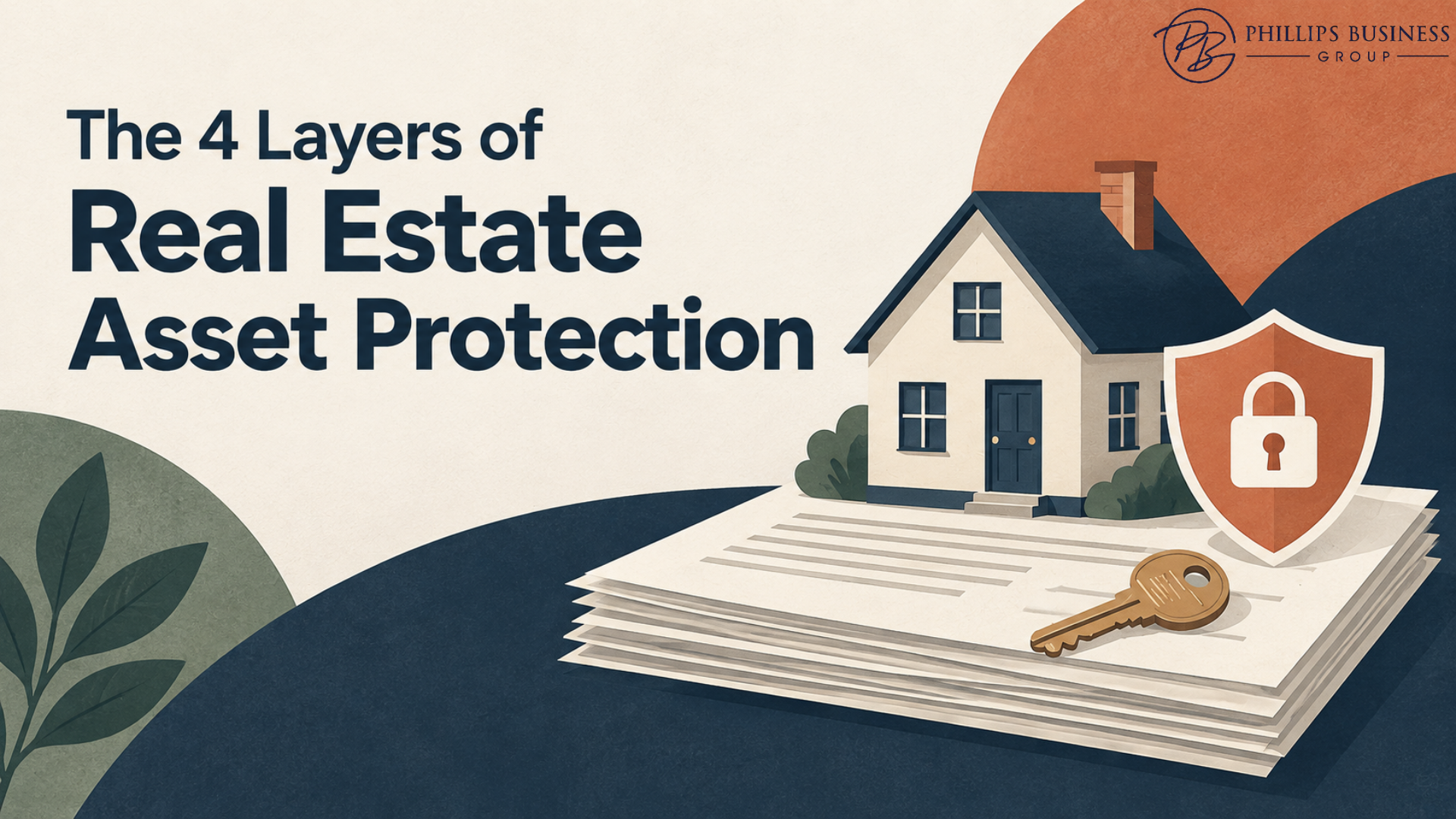
A lot of investors think real estate asset protection means buying an LLC online and calling it done. It doesn’t work that way. Real protection is a system, not a single document. It’s built from four layers that work together: insurance, entity structure, privacy, and legal planning. Skip one, and the rest of the structure can quietly fall apart.
Here’s how each layer works, why the order matters, and what actually happens when a claim hits a portfolio that was built the right way.
Why One LLC Isn’t the Whole Answer
Picture a landlord with six rental properties and close to two million dollars in equity across the portfolio. That equity took years to build, and it’s worth protecting properly.
Most people in that position think an LLC is the finish line. It’s actually just one piece. An LLC helps contain risk, but it isn’t a substitute for insurance, and it won’t fix outdated coverage or sloppy recordkeeping on its own. Real asset protection for rental properties has to address two very different kinds of exposure:
- Inside liability: a problem that starts at the property itself, like a tenant injury.
- Outside liability: a problem in your personal life that puts your rental properties at risk, even though the properties had nothing to do with it.
Good insurance and a properly built entity structure solve two different problems. You need both.
Layer 1: Insurance That Actually Matches Your Portfolio
Insurance comes first, before any entity or trust conversation, because it’s your first line of defense. Property coverage, landlord liability coverage, and umbrella or excess coverage that specifically names your rental activity all belong here.
One detail trips up a lot of landlords: an umbrella policy doesn’t automatically extend to every rental property just because you bought one. As a portfolio grows, coverage limits often don’t grow with it. If a claim exceeds an outdated policy limit, the entity structure sitting on top of it won’t make up the difference.
Legal structures are designed to contain what insurance doesn’t cover. Build them on top of thin coverage, and you end up with impressive paperwork and a dangerously underfunded foundation.
Layer 2: Entity Segregation
This is where LLCs come in, but the goal isn’t privacy. It’s containment.
When higher equity or higher risk properties each sit in their own properly operated LLC, a claim tied to one property is meant to stay connected to that property and that entity, rather than spreading automatically to every other property you own.
A few things affect how well this actually works:
- Whether the LLC is genuinely operated as separate, with its own bank account, contracts, and records
- Whether it’s ever commingled with personal finances or with other entities you own
- Your state’s specific LLC laws, including charging order protection, which addresses outside liability rather than inside liability
Tax classification is a separate question from liability protection. A single-member LLC is generally disregarded for federal income tax purposes unless it elects otherwise, and a multi-member LLC is generally taxed as a partnership unless it elects otherwise. Either way, the strength of the legal protection comes down to state law and how well the entity is actually run, not how it’s taxed.
Layer 3: Privacy and Operational Separation
This is where land trusts come in, and it’s also where people tend to overestimate what they do.
In states where land trusts are recognized, the recorded deed can list the trustee instead of the beneficial owner. That reduces casual visibility, so someone doing a quick public records search won’t immediately see your name attached to the property.
That’s it, though. It doesn’t make ownership secret, and it won’t stop disclosure during litigation or to lenders, insurers, and taxing authorities who are legally entitled to that information. A land trust isn’t an invisibility cloak. Paired with a registered agent, clean public-facing records, and proper contracts and bookkeeping, it supports the separation you built in layer two. It doesn’t replace it.
Layer 4: Advanced Legal and Estate Planning
This layer belongs to an attorney, not a blog post or a social media video. It covers legitimate trusts, succession planning, how personal guarantees on loans are handled, and financing arrangements, and all of it needs to be in place before a claim exists, not after.
One thing worth being direct about: equity stripping, or deliberately encumbering a property to make it look less attractive to a plaintiff, gets talked about a lot online. Some legitimate plans do use third party financing secured by a property, but a recorded lien isn’t automatically protective just because paperwork exists. The debt has to reflect a real transaction with real consideration and commercially defensible terms. Sham loans or transfers meant to hinder existing or reasonably foreseeable creditors can be challenged and unwound in court.
Before restructuring anything, review loan documents and due-on-sale clauses, confirm your insurance named insureds match your actual ownership structure, and check whether the transfer could trigger transfer taxes or a property tax reassessment in your state. These details vary widely by state, which is exactly why this layer needs a professional in the room from day one.
What It Looks Like When the System Works
Here’s a real example, details changed to protect the client. A landlord with six rental properties and strong equity brought in an asset protection attorney. The first step wasn’t an LLC filing. It was a coverage review, which turned up landlord liability limits that hadn’t kept pace with the portfolio’s growth. That got fixed immediately.
From there, the higher equity properties were moved into individual entities, each with its own registered agent, bank account, and recordkeeping, set up before anything went wrong.
Months later, a tenant filed an injury claim tied to one property. The insurance policy funded the defense, and the claim stayed centered on that one property and entity. The other five properties, held separately, were never pulled in. No dramatic rescue, just a structure that did exactly what it was designed to do.
Common Mistakes That Undermine Asset Protection Plans
- Buying an LLC online without reviewing insurance first
- Piling every property into one entity for convenience
- Commingling funds between entities or with personal accounts
- Assuming a land trust hides ownership from everyone, including courts and lenders
- Moving title without checking due-on-sale clauses or insurance named insureds
- Setting up structures alone instead of coordinating a tax professional, attorney, insurance advisor, and lender
FAQ
Does an LLC protect my rental property from lawsuits? An LLC can help contain a claim to the property and entity where it originated, but only if the LLC is genuinely operated as separate, with its own accounts and records. It’s not a substitute for adequate insurance.
What’s the difference between inside and outside liability? Inside liability comes from something that happens at the property, like a tenant injury. Outside liability comes from something in your personal life that puts your properties at risk, even though the properties weren’t involved.
Does a land trust hide who owns my property? Not entirely. In states that recognize them, a land trust can keep the trustee’s name on the public deed instead of yours, which reduces casual visibility. It won’t prevent disclosure in a lawsuit or to lenders and insurers.
Should I put all my rental properties in one LLC? Generally, no. Piling multiple properties into one entity means a claim against one property can expose the equity in all of them. Higher equity or higher risk properties are usually better held in their own separate entities.
What should I set up first, an LLC or insurance? Insurance comes first. It’s your primary line of defense and funds your legal defense and any settlement up to your policy limits. Entity structure is designed to contain what insurance doesn’t cover, not replace it.
The Bottom Line
Real estate asset protection isn’t one form or one filing. It’s insurance, entity structure, privacy, and legal planning working together, reviewed as a system rather than bolted on piece by piece. If those four pieces have never been looked at together for your portfolio, that’s usually where the biggest gap is hiding.